
Blog Details


Spam Spam Spam Spam Spam
I got enough notifications this week that I thought it was worth posting about for the safety of our clients.
We see a lot of spam and phishing attempts. There are evolving threats and they’re getting better, but the core concept remains the same:
Send enough junk out and hope someone, somewhere falls for it.
This is basically the same thing Coca Cola does to get you to drink Coke instead of Pepsi, but the nefarious actors have a little bit more on their mind than getting you to buy their carbonated sugar water.
(No hate, Coca Cola. You’re delicious and only made my post here as an example of stellar marketing.)
Anyway – I wanted to reiterate a few things scammers are trying to do and remind you it’s always better to be safe than sorry.
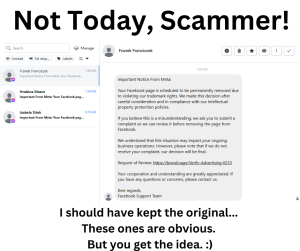
The trigger this week were messages on Facebook. Very serious looking messenger notes from pretty convincing-looking profiles claiming I was infringing on Trademark and my profile would be permanently deleted unless I clicked on a link.
The link looked pretty legit, and on a busy day, I may even have clicked the link they included to submit a review.
Luckily I have a private, ironclad personal policy of never clicking on links I didn’t ask for. Minutes later, a much less well-crafted profile sent me the same message… The jig was up.
I googled the main subject of the message (Google hint: I cut and paste a sentence or two with “quotation” marks on it) and immediately found some posts from helpful people on the internet who had posted about their same experience with this.
Spam bin it is.
A client also emailed me about a Trademark infringement scam from a company in China claiming they would sue if they didn’t hear from someone about using the same domain name as their manufacturing company in China. This one again, got some attention years ago when a manufacturing client I had contacted me pretty concerned as they were looking to expand into Chinese markets. So we went a bit down the rabbit hole with that one before discovering… scam/spam.
For the acute care home client, we didn’t need to show the same concern. But that’s how these scams work. Like horoscopes – they send out a fairly generic message to thousands and thousands of people and hope it resonates with you enough to forgo common sense and click on unsolicited links.
I am always happy when my clients contact me with questions about potential scams – I appreciate the level of trust in my expertise, and I would WAY rather take 2 minutes and reassure you that it is not a scam, rather than see you deal with the fallout of cybercrime.